
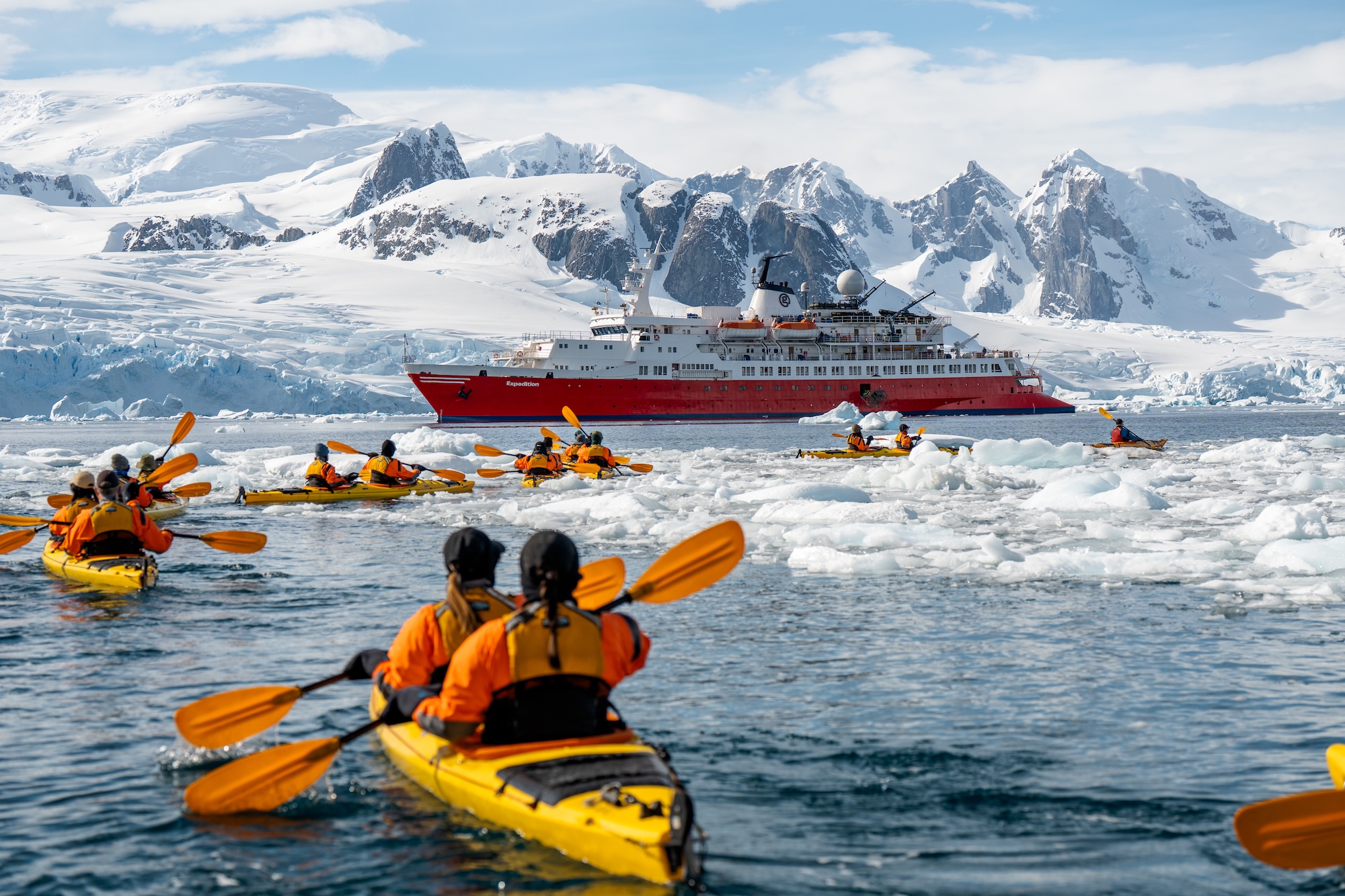
I have spent a fair amount of time around cruise ships. I know how they work, I know what they offer, and I know the language people use to sell them. So when I stepped aboard G Adventures’ polar vessel in Troon, Scotland, for an exclusive media day, I arrived with reasonably calibrated expectations.
The kayak programme recalibrated them completely.
Here is the thing about a Zodiac excursion, brilliant as they are: you are still a passenger. You are still being taken somewhere by someone else, engine humming beneath you, the world at a slight remove. The moment someone in the expedition team started walking me through what the kayak operation on the Expedition actually looks like in practice, something shifted. This was different. This was something else entirely.
Picture yourself at water level in Antarctica. No engine. No noise competing with the landscape. Just you, a paddle, and the kind of silence that most of us have never actually experienced because we live in a world that never stops making sound. That is where the kayak programme takes you. And once I understood that, I wanted to know everything about it.
What the Kayak Programme Actually Is
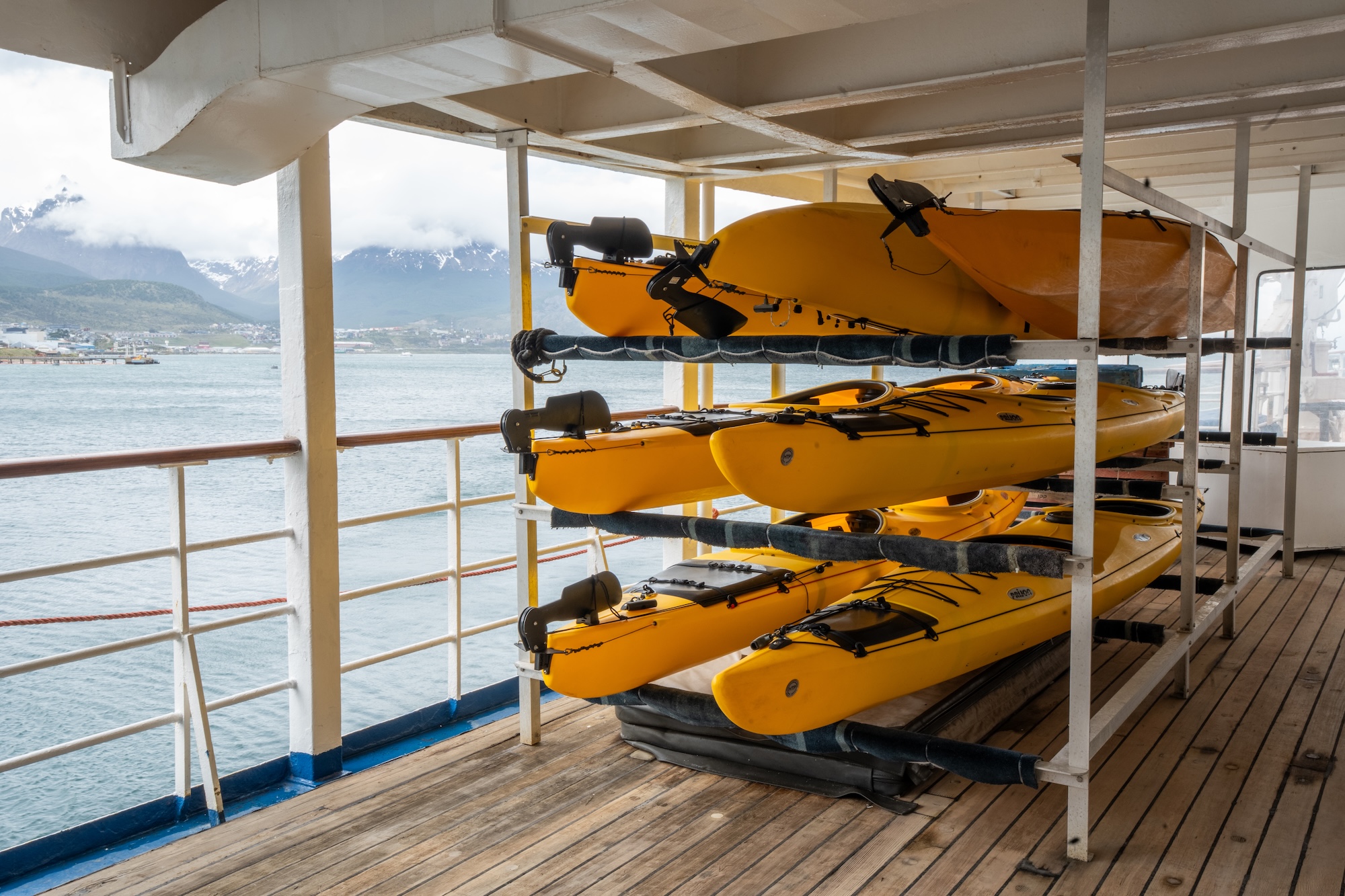
The Expedition has capacity for around twenty kayakers at any one time. These guests can head out on the water as a regular, built-in feature of the itinerary, weather permitting, as part of their polar experience. This is not a bolt-on extra squeezed between shore landings and dinner sittings. It is woven into the fabric of how the ship operates.
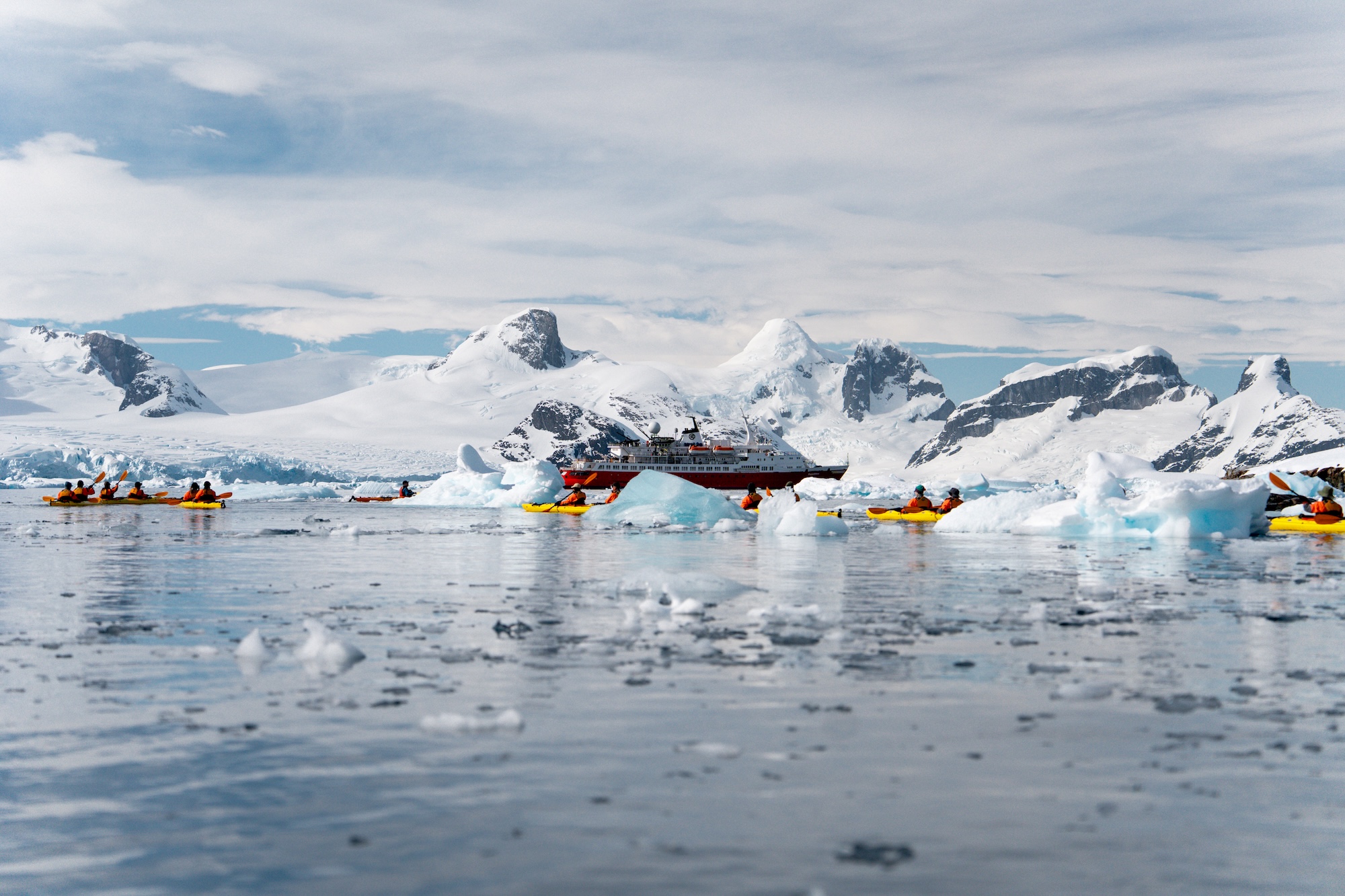 I was taken through the logistics during the ship tour, and what struck me immediately was the sheer thoughtfulness of the setup. The vessel’s design means the entire passenger complement can be off the ship and onto the water or shore within twenty to thirty minutes. On larger cruise ships, that same process can take well over an hour. In polar environments, where weather windows open and close without warning and where a pod of orcas can appear at any moment, that responsiveness is genuinely priceless.
For kayakers specifically, that speed of deployment means more time on the water and more genuine immersion in the environment. The kayaks launch alongside the Zodiac boats, and once you are out there, you are entirely at the level of the sea. No deck railing between you and the landscape. No glass window softening the cold air. Just the water, the ice, and an astonishing, planet-scale silence.
Why Kayaking Changes Everything About a Polar Experience
The crew member who walked me through the kayak operation used a phrase that has stayed with me. He described it as the most natural way a human being can investigate one of the most extreme landscapes in the world. I think that is exactly right.
When you are in a kayak in Antarctica or the Arctic, you are not a spectator. You are not viewing the landscape through a lens or from a safe and comfortable remove. You are in it. You are as close to the water as you can physically get without being submerged in it. There is no engine running beneath you, no vibration, no noise that competes with the world around you. You are an individual in a small vessel, moving under your own power through one of the most remote and extraordinary environments on Earth.
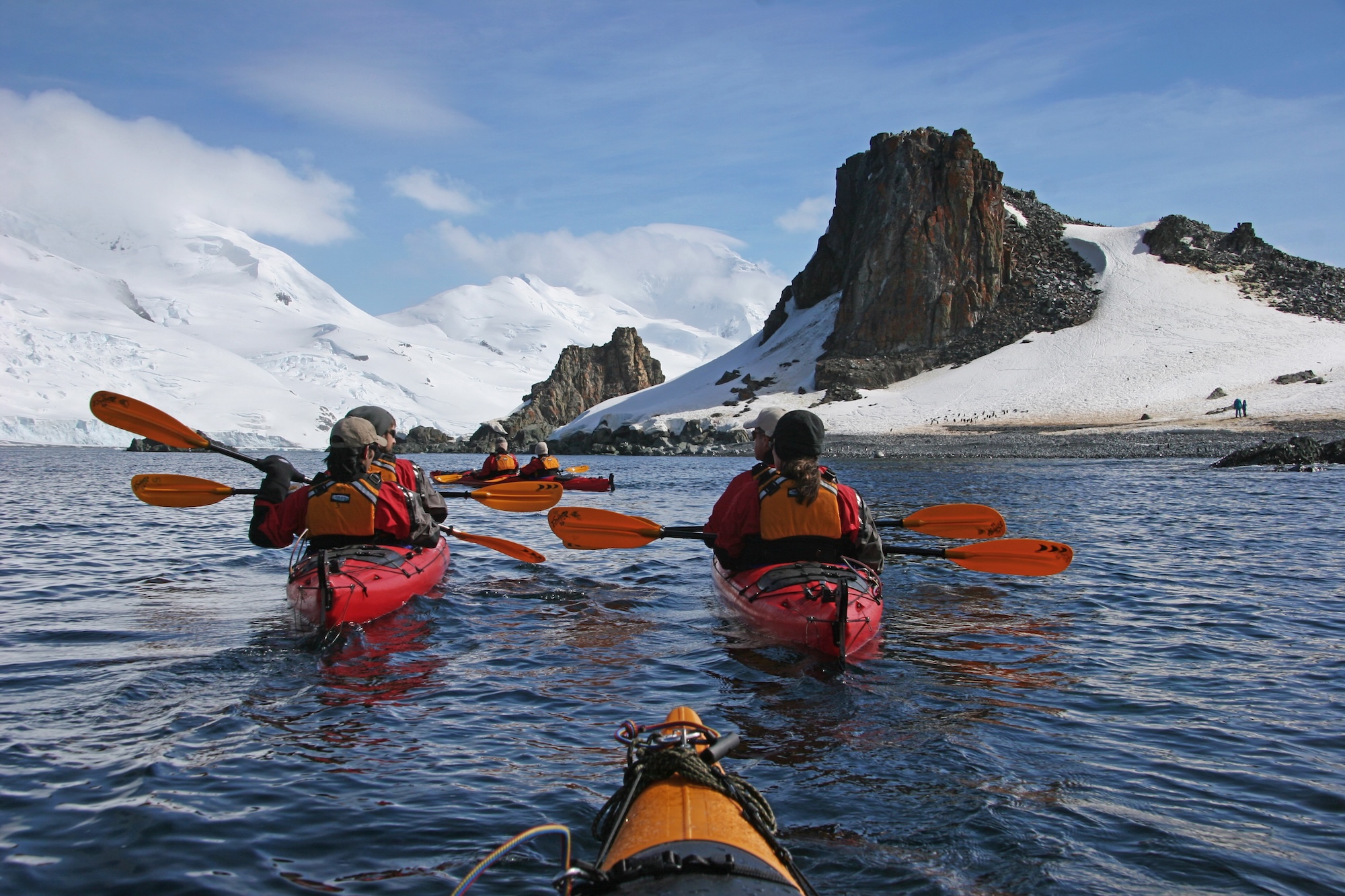 And because you are not shoulder to shoulder with a hundred other passengers, because you have real space around you and genuine autonomy over where you point your bow, the experience has a quality of intimacy that larger expedition formats simply cannot replicate. You can drift toward a floating berg and sit with it. You can pause when a seal surfaces nearby and hold your paddle still. You can choose your own pace, your own direction, your own moment of stillness.
Do You Need Experience?
This is the question most people ask, and the answer is reassuringly straightforward: you need a modest level of paddle experience, and nothing more. You are not expected to arrive as a seasoned sea kayaker. What the programme asks for is familiarity with the basics, enough comfort in a kayak that you can focus on what is around you rather than on what you are doing with your hands.
The crew’s advice, and I thought it was beautifully practical, is to book a couple of sessions on a local lake before your departure. A flat-water paddle somewhere near home, just to get comfortable. That is genuinely all it takes to unlock one of the most extraordinary optional experiences available on any expedition cruise in the world.
 Think about that ratio for a moment. A few afternoons on a local reservoir. In exchange for mornings paddling through Antarctic silence, surrounded by glaciers and wildlife that most of the world’s population will never see in their lifetimes.
The Bigger Picture: Why This Matters Beyond the Adventure
It would be easy to frame the kayak programme purely as an adventure activity, a thrilling tick on a bucket list. But spending time with the expedition team on board the Expedition reframed that entirely for me.
One of the ship’s naturalists put it simply over lunch: you cannot protect what you do not love. The job of the kayak programme, like everything else G Adventures has built into the expedition experience, is to help people fall in love with these environments in a visceral, deeply personal way. Not from a safe distance, not through a screen, but up close, at water level, with the cold air on their faces and the sound of the ocean in their ears.
 People who have that experience do not come home unchanged. They come home as advocates, as ambassadors, as people who understand what is at stake in the polar regions in a way that no documentary or classroom can manufacture. One kayak session at a time, the Expedition is building a community of people who genuinely care about some of the most vulnerable ecosystems on the planet.
My Verdict From the Ship Visit
I did not kayak in Antarctica. I attended a media event at a Scottish harbour and heard the programme described to me by people who have done it dozens of times. But I came away from that conversation completely convinced that this is one of the most genuinely special optional experiences available in expedition travel today.

The combination of small group size, a vessel that prioritises speed of deployment, an expedition team of genuine specialists, and a natural environment that simply has no equivalent anywhere on Earth creates something that the word ‘excursion’ does not come close to capturing. This is not a trip feature. This is a life experience.
If you have even a passing interest in polar travel, and particularly if you have ever paddled anything at all, I would urge you to look seriously at what G Adventures has built here. The Expedition is running polar itineraries across Antarctica and the Arctic, and the kayak programme is available as part of the onboard experience.
You can explore the full range of G Adventures’ polar expedition itineraries at gadventures.com. Go and look. Then go.