
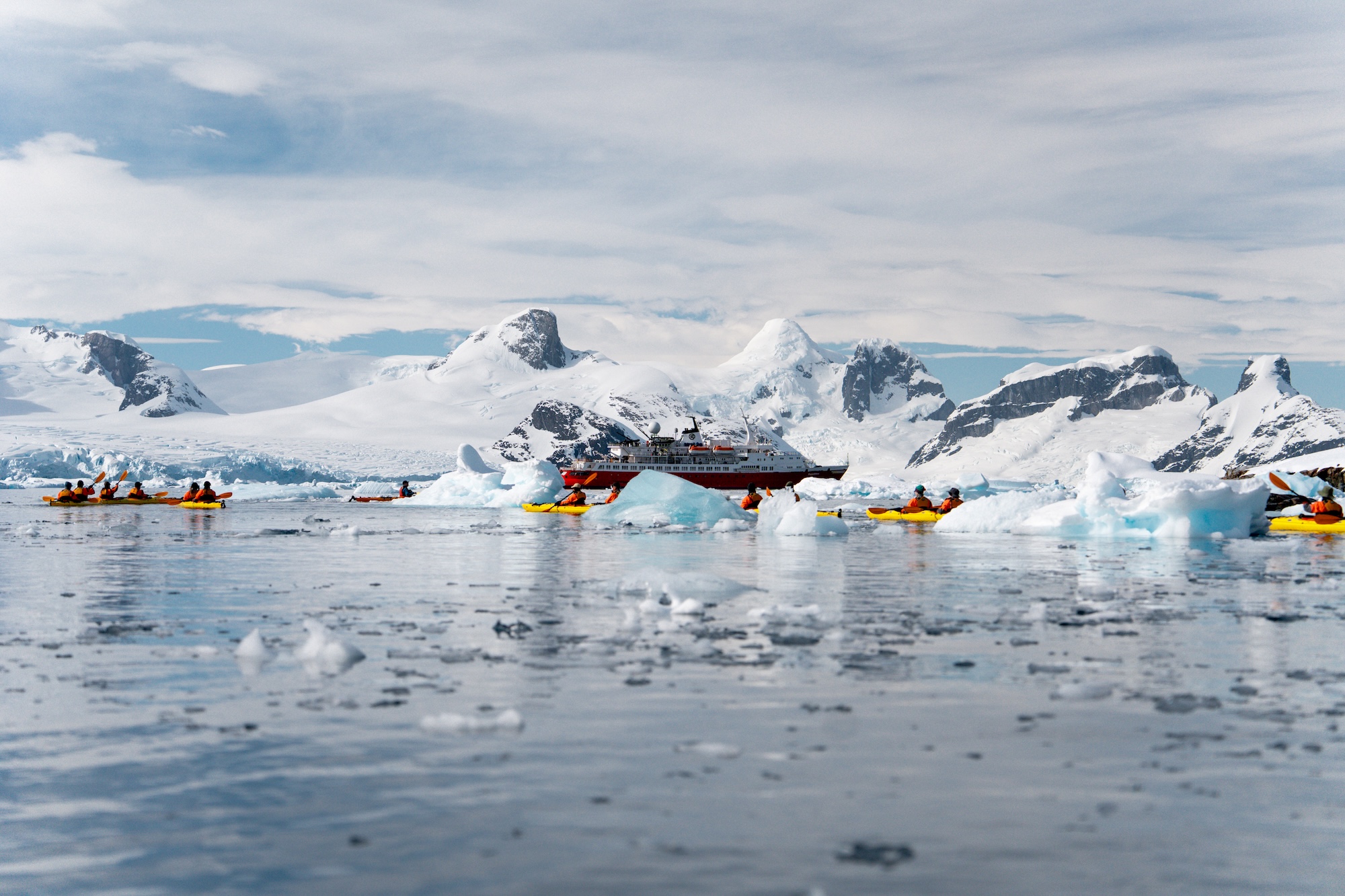
If you have decided that a polar expedition belongs on your list, you have already made the most important decision. The next one is considerably harder. Antarctica and the Arctic are both extraordinary, both remote, and both capable of changing the way you see the world. But they are very different places, offering very different experiences. Here is what you need to know to choose between them.
Two Poles, Two Personalities
Antarctica is a continent surrounded by ocean. The Arctic is an ocean surrounded by land. That geographical distinction shapes everything: the landscapes, the wildlife, the feeling of being there, and the kind of traveller each destination tends to attract.
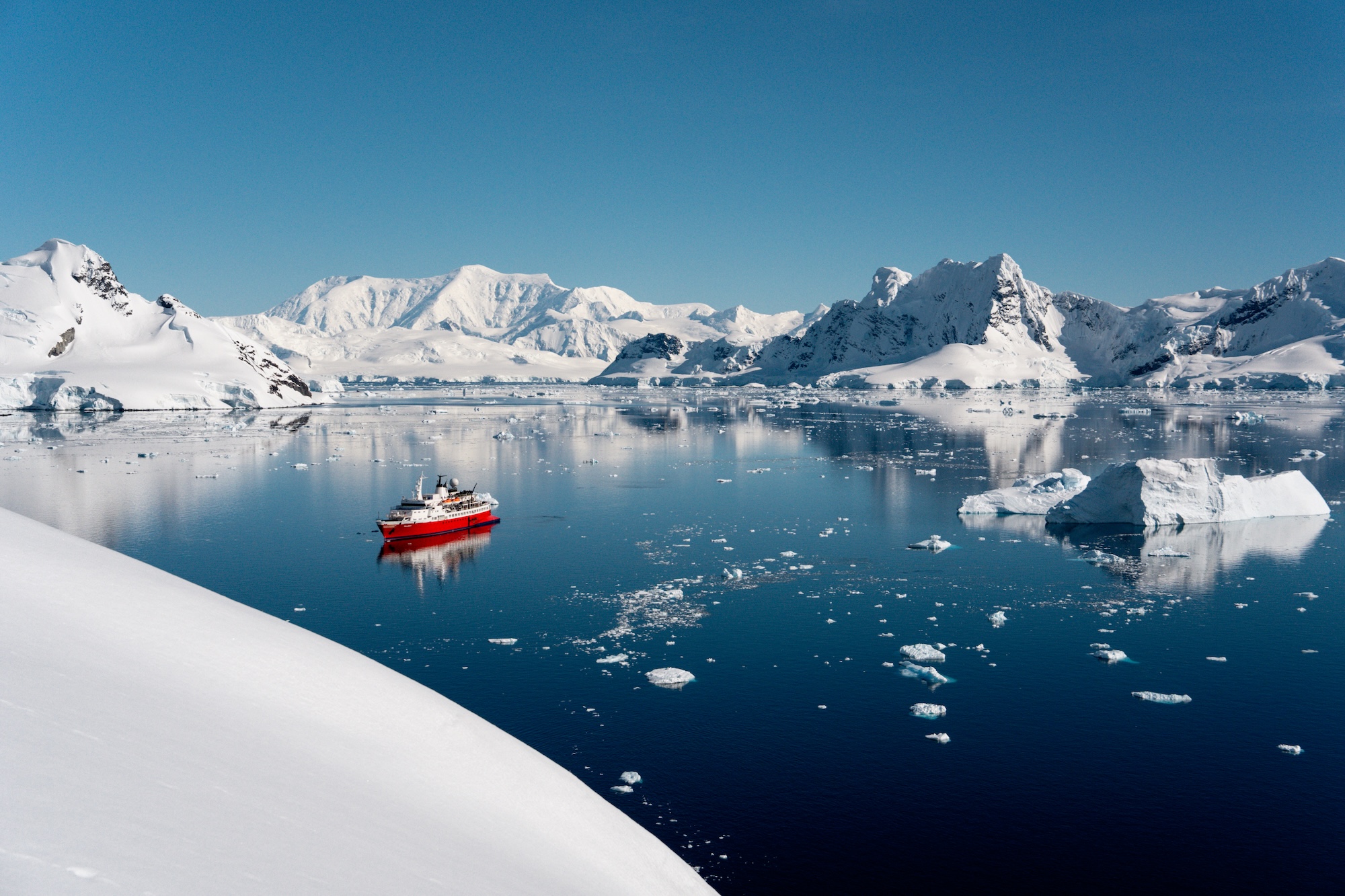
Antarctica is raw, vast, and almost entirely devoid of permanent human habitation. It belongs to no country. It has no cities, no roads, no indigenous population. What it has are towering glaciers, immense icebergs, gigantic penguin colonies, and a silence so complete it becomes a presence of its own. Going there feels genuinely frontier. You are not visiting a remote destination. You are visiting the end of the Earth.
The Arctic, by contrast, is a living, inhabited world. Svalbard, Iceland, Greenland, and the communities scattered across the High North bring a human dimension to the expedition that Antarctica simply does not have. The Arctic feels wild and ancient, but it also feels connected to the long story of human endeavour in extreme places.
The Wildlife: Penguins vs Polar Bears
This is usually the question that tips people one way or the other, and it is a fair one to lead with.
Antarctica’s wildlife is staggering in its density and its fearlessness. Penguins dominate the shore life, from vast colonies of Adélies to the iconic emperor and chinstrap species. Leopard seals patrol the ice edges. Humpback and minke whales surface with an ease and a closeness that genuinely stops the breath. Albatross ride the wind overhead with an impossible grace. Because these animals have evolved in a place with no natural land predators of humans, they are largely indifferent to your presence. The close encounters are not incidental. They are routine.
 The Arctic offers a different but equally compelling cast. Polar bears are the headline act, and rightly so. Spotting one on the ice, whether from the ship or from a Zodiac, is one of the great wildlife experiences on the planet. Add walrus hauled out on rocky shores, Arctic fox picking through the tundra, puffins nesting on cliffsides, reindeer grazing at the water’s edge, and an extraordinary diversity of seabirds, and you have a destination that delivers at every turn.
 If you have to choose: Antarctica for sheer quantity and closeness of wildlife encounters. The Arctic for variety, and for the polar bear.
When to Go
The seasons do not overlap, which makes this a practical question as much as a preference one.
Antarctica’s expedition season runs from October through March. Early season, October and November, brings bigger icebergs, pristine snow, and far fewer ships. December and January are the warmest months, with the longest days and peak wildlife activity, including penguin chicks. February and March see whale sightings increase significantly as marine activity reaches its richest.
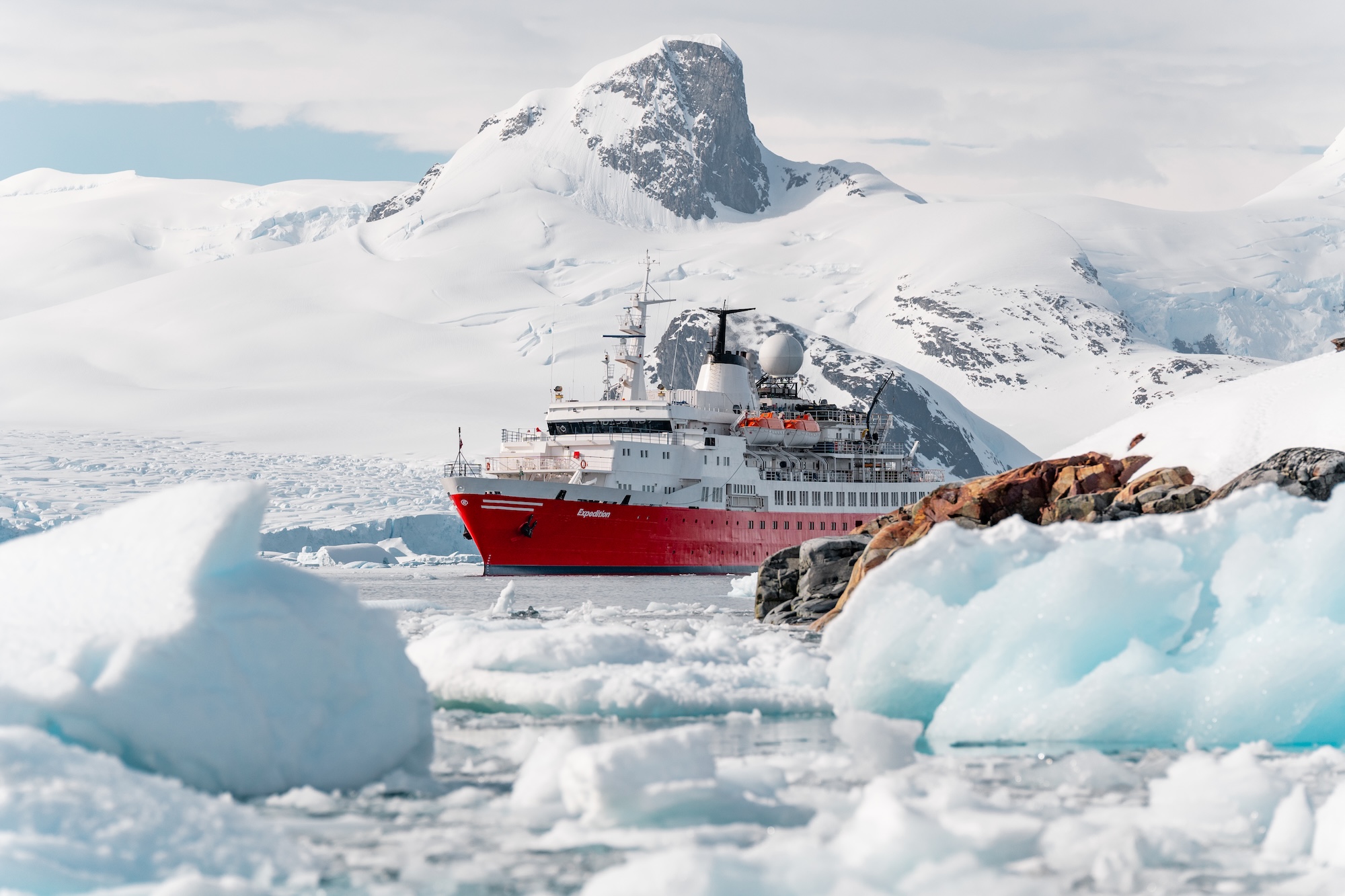 The Arctic season runs from June through September. June and July offer peak wildlife viewing and the extraordinary phenomenon of the midnight sun, that strange, luminous quality of light that stays with you long after you have returned home. August brings more navigational access as ice recedes, along with rich birdlife and marine activity. September offers something different again: crisper air, softer light, fewer ships, and conditions that photographers tend to prize above all others.
Practicalities: Cost, Duration, and the Journey There
The Arctic is the more accessible of the two, both geographically and financially. G Adventures’ Arctic expeditions run with itineraries ranging from eight days up to sixteen. Gateway cities include Longyearbyen in Svalbard, Reykjavik in Iceland, and Tromsø in Norway, all of which are straightforward to reach from the UK.
 Antarctica involves a longer journey and a higher starting price, reflecting the distance, the duration, and the sheer scale of the operation required to get you there safely. Most Antarctic departures operate out of Ushuaia in Argentina, the southernmost city in the world, and involve crossing the Drake Passage, the notorious stretch of open ocean between South America and the Antarctic Peninsula. It is not always a gentle crossing. It is, however, an experience in its own right, and with G Adventures’ newly engined vessel offering a steadier, faster passage than its predecessor, the Drake has become considerably less daunting than it once was. Itineraries range from eleven days to twenty-two, with longer voyages taking in South Georgia and the Falkland Islands as well.
So Which Should You Choose?
Choose Antarctica if you want the most remote, most dramatic, most purely untouched wilderness on the planet. If the idea of standing on a continent that belongs to no one, surrounded by wildlife that has never learned to fear you, sounds like the journey of a lifetime, it almost certainly will be.
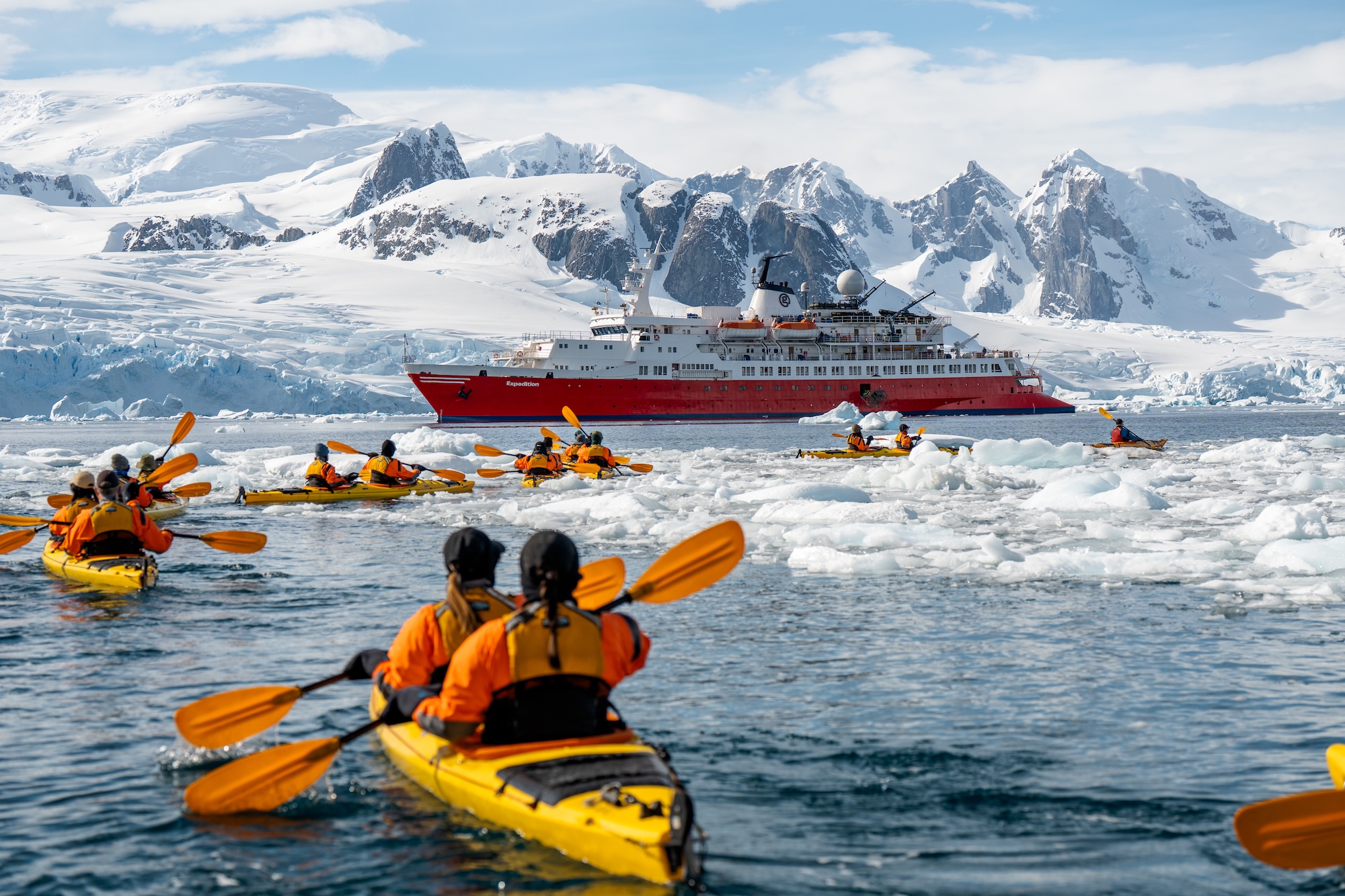 Choose the Arctic if you want polar wilderness combined with cultural depth, a wider range of landscapes, the chance to see a polar bear in the wild, and a slightly shorter journey from home. It is no less extraordinary for being more accessible.
The honest truth is that most people who do one end up wanting to do the other. The expedition teams have a word for it. They call it the polar bug. Consider yourself warned.
 Explore all available Antarctica and Arctic expedition departures with G Adventures at G Adventures Polar Expeditions.